What to Expect During Your First Pregnancy Checkup
Introduction
Your first pregnancy checkup can bring excitement, questions, and concerns about your baby’s health. Knowing what to expect can help you feel confident and prepared for this important appointment. During the consultation, your doctor may review your medical history, check your blood pressure, recommend blood and urine tests, and discuss whether an ultrasound is needed. According to India’s NFHS-5 (2019–2021), 70% of mothers received an antenatal checkup during their first trimester, highlighting the importance of early pregnancy care. (Ministry of Health and Family Welfare) If you are exploring Pregnancy Care in OMR, understanding the first visit can help you choose suitable medical support.
Why Is Your First Pregnancy Checkup Important
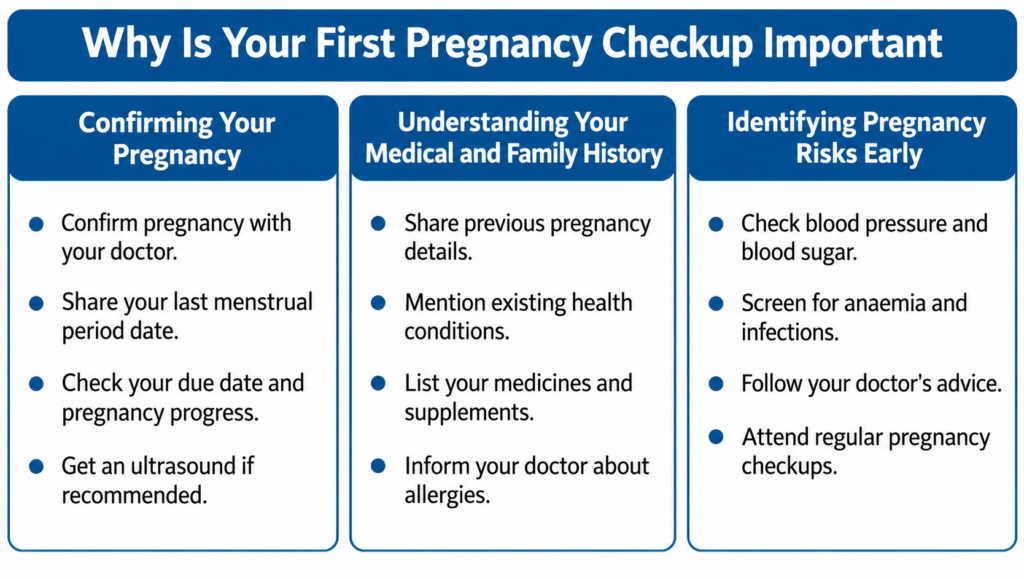
Your first pregnancy checkup helps you understand your health and your baby’s early development. During this visit, your doctor reviews your medical history, checks your blood pressure, and recommends suitable tests. Early antenatal care also helps identify potential health concerns and guides you towards a safer pregnancy. The World Health Organization (WHO) recommends a minimum of eight antenatal care contacts throughout pregnancy, starting Pregnancy Care in OMR thin the first 12 weeks. I
Confirming Your Pregnancy and Estimating Your Due Date
Your first pregnancy checkup helps confirm your pregnancy and estimate your expected delivery date. Your doctor may review your home pregnancy test results and recommend a urine or blood test when necessary. You should share the first day of your last menstrual period because this information helps estimate how many weeks pregnant you are. Your doctor may also recommend an ultrasound to assess the pregnancy’s location, development, and gestational age.Pregnancy Care in OMR
The WHO recommends an ultrasound before 24 weeks to help estimate gestational age and assess pregnancy development. However, your doctor will decide the appropriate timing based on your medical history and symptoms. When you seek Pregnancy Care in OMR,
Understanding Your Medical and Family History
Your medical and family history helps your doctor understand your individual pregnancy needs. During your first consultation, answer questions honestly about previous illnesses, medications, allergies, and earlier pregnancies. Your doctor can use this information to recommend appropriate tests and monitoring. For example, Pregnancy Care in OMR
Before your appointment, prepare these details:
- Previous pregnancies: Mention miscarriages, complications, or previous deliveries.
- Existing medical conditions: Explain any history of diabetes, thyroid disorders, or high blood pressure.
- Current medications: List prescription medicines, supplements, and herbal products you take.
The WHO recommends personalised antenatal care that considers each woman’s health needs. Sharing accurate information helps your doctor plan suitable pregnancy care in OMR
Identifying Potential Pregnancy Risks Early
Early pregnancy assessments help your doctor identify health concerns and recommend appropriate care. Some conditions cause few noticeable symptoms during the early stages, so regular checkups and recommended tests play an important role. The WHO recommends antenatal contacts to screen for potential complications and address problems as they arise.Pregnancy Care in OMR
Your doctor may assess factors such as blood pressure, blood sugar, anaemia, and relevant infections. For example, a woman with high blood pressure may need more frequent monitoring, while someone with diabetes may require a personalised blood sugar management plan. Pregnancy Care in OMR
What Happens During Your First Pregnancy Consultation
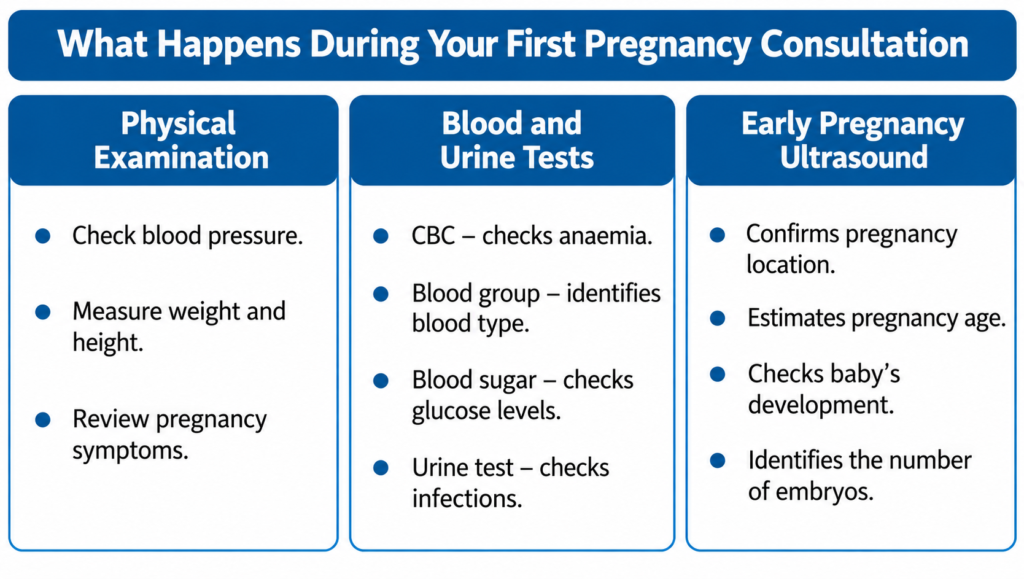
Your first pregnancy consultation helps you understand your health and your baby’s development. During this visit, your doctor discusses your medical history, checks your vital signs, and recommends suitable tests. You can also ask questions about nutrition, supplements, exercise, and common pregnancy symptoms. The World Health Organization Pregnancy Care in OMR (WHO) recommends at least eight antenatal care contacts throughout pregnancy to support maternal and baby health. Your doctor will personalise your appointment schedule according to your needs.
Physical Examination and Initial Health Assessment
Your doctor begins your first pregnancy consultation by checking your overall health. These initial assessments help identify potential concerns and establish a baseline for future appointments. Your doctor may measure your blood pressure, weight, and height, review your symptoms, and recommend additional examinations based on your medical history.
Key assessments may include:
- Blood pressure: Helps identify hypertension, which can affect pregnancy.
- Weight and BMI: Helps your doctor understand your nutritional needs and recommend appropriate weight monitoring.
- Symptom review: Covers nausea, fatigue, abdominal discomfort, and other concerns.
- General examination: Checks your overall health and identifies concerns that need further assessment.
- Personalised advice: Helps you understand nutrition, supplements, and suitable daily activities.
For example, if your blood pressure measures higher than expected, your doctor may repeat the measurement and recommend further evaluation.
Blood Tests and Urine Tests
Your doctor may recommend blood and urine tests during your first pregnancy consultation to assess your health and identify conditions that need attention. These tests help your healthcare team plan suitable antenatal care.
| Test | What It Checks | Why It Matters |
| Complete blood count (CBC) | Haemoglobin and blood cell levels | Helps identify anaemia |
| Blood group and Rh factor | Your blood type | Helps guide care if Rh incompatibility becomes a concern |
| Blood sugar testing | Glucose levels | Helps assess diabetes risk when indicated |
| Infection screening | Selected infections, including HIV, hepatitis B and syphilis | Supports early diagnosis and appropriate treatment |
| Urine test | Signs of infection, protein, or other abnormalities | Helps assess urinary and other health concerns |
Your doctor may recommend additional tests according to your needs. For example, if a urine test suggests a urinary tract infection, your doctor may request a urine culture. Ask your healthcare provider to explain your results and any follow-up steps when arranging Pregnancy Care in OMR
Ultrasound Scans During Early Pregnancy
An early pregnancy ultrasound helps your doctor assess your pregnancy and understand how it develops. The scan uses sound waves to create images without ionising radiation. Your doctor may recommend a scan to confirm the pregnancy’s location, estimate gestational age, assess the number of embryos, or investigate symptoms such as bleeding or abdominal pain.
The World Health Organization recommends at least one ultrasound before 24 weeks of pregnancy to estimate gestational age and assess fetal development.
How to Prepare for Your First Pregnancy Checkup
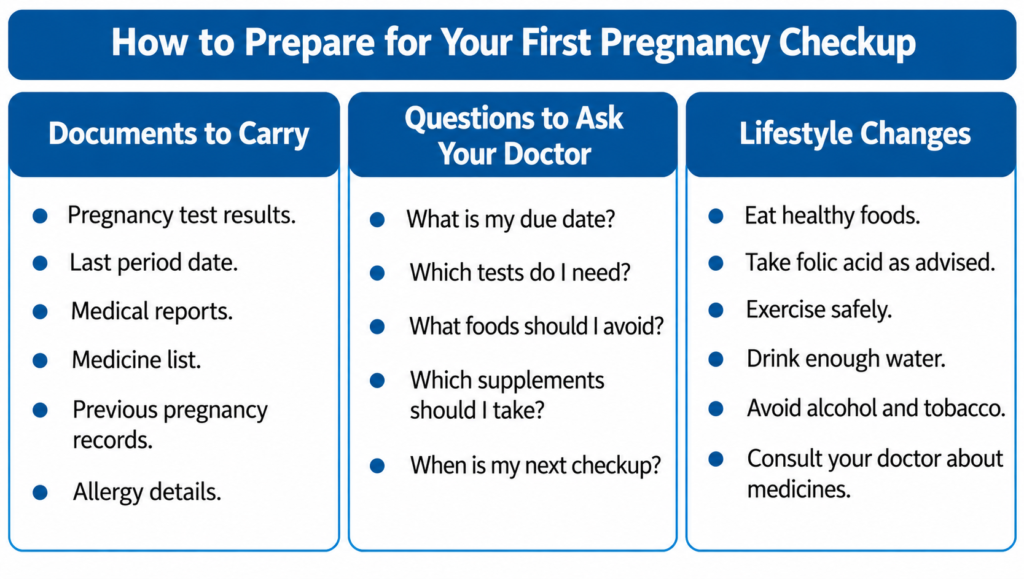
Preparing for your first pregnancy checkup helps you feel confident and make the most of your doctor’s visit. Start by collecting your medical records, noting your symptoms, and listing any medications you take. Remember the first day of your last menstrual period because it helps your doctor estimate your pregnancy timeline. The World Health Organization recommends at least eight antenatal care contacts throughout pregnancy, beginning within the first 12 weeks. Plan your appointment early and prepare questions about nutrition, tests, and supplements. If you are exploring Pregnancy Care in OMR, choose a qualified doctor who explains your options clearly
Documents and Medical Records to Carry
Carrying the right documents helps your doctor understand your health history and plan suitable pregnancy care. Before leaving home, organise your previous medical reports and write down important health details. You do not need to complete every test before your first appointment; your doctor will recommend investigations based on your needs.
Keep these documents ready:
- Pregnancy test results: Carry your home pregnancy test details or laboratory report, if available.
- Last menstrual period details: Note the first day of your last period to help estimate your due date.
- Previous medical reports: Bring records of diabetes, thyroid conditions, high blood pressure, or other relevant illnesses.
- Medication list: Write down prescription medicines, supplements, and herbal products you currently take.
- Previous pregnancy records: Carry details of earlier pregnancies, miscarriages, deliveries, or complications, if applicable.
- Allergy information: Mention any known medication or food allergies.
Questions to Ask Your Pregnancy Doctor
Your first pregnancy consultation gives you an opportunity to understand your health and discuss your concerns. Asking clear questions helps you make informed decisions about your pregnancy. Write down your doubts before the appointment so you do not forget anything during the consultation.
Consider asking your doctor these questions:
- Pregnancy progress: How many weeks pregnant am I, and when is my estimated due date?
- Medical tests: Which blood tests, urine tests, or ultrasound scans do I need?
- Nutrition: Which foods should I eat, and which foods should I avoid?
- Supplements: Do I need folic acid, iron, or other prenatal supplements?
- Daily activities: Can I continue my usual exercise and work routine?
- Symptoms: Which symptoms require immediate medical attention?
- Follow-up visits: When should I schedule my next appointment?
- Medication safety: Are my current medicines safe during pregnancy?
For example, if you experience frequent nausea, ask your doctor how to manage it safely. When exploring Pregnancy Care in OMR, choose a healthcare professional who welcomes your questions and explains medical advice in simple language
Lifestyle Changes to Discuss During Your Visit
Your daily habits can influence your health throughout pregnancy. During your first consultation, discuss nutrition, physical activity, sleep, and supplements with your doctor. Small, consistent changes can help you build healthy routines while your body adapts to pregnancy.
Here are important lifestyle topics to discuss:
- Balanced nutrition: Include vegetables, fruits, whole grains, protein-rich foods, and suitable dairy products in your meals.
- Folic acid: Ask your doctor about supplementation. The WHO recommends 400 micrograms of folic acid daily for pregnant women, starting as early as possible.
- Physical activity: Discuss suitable exercises, such as walking, based on your health and pregnancy.
- Sleep and hydration: Drink enough water and maintain a regular sleep schedule.
- Avoid harmful substances: Avoid alcohol, tobacco, and recreational drugs.
- Medication safety: Check with your doctor before starting or stopping medicines or supplements.
For example, if you usually drink several cups of coffee daily, ask your doctor how to limit caffeine intake during pregnancy. If you need Pregnancy Care in OMR,
How to Choose the Right Pregnancy Care in OMR
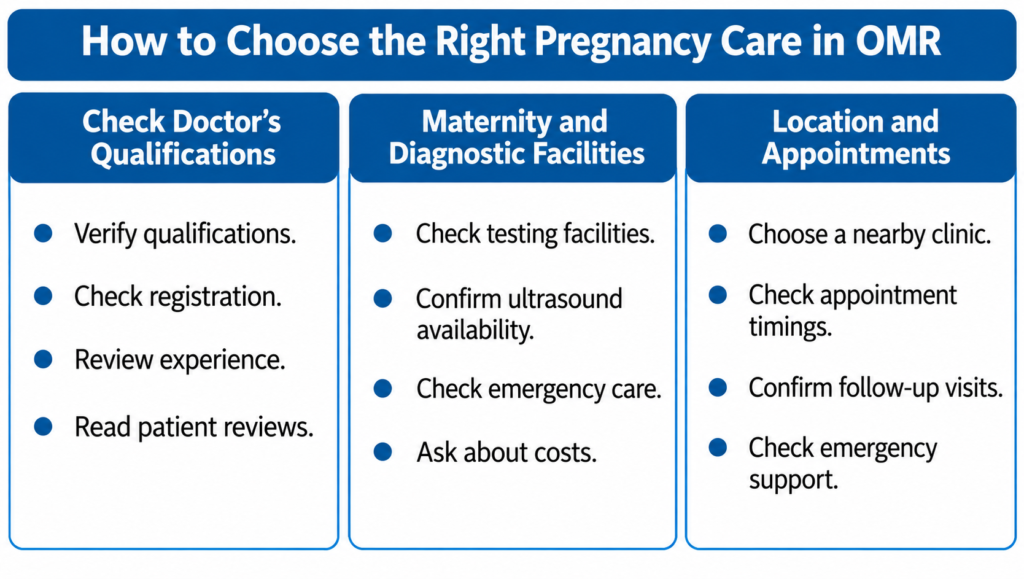
Choosing the right pregnancy care provider helps you feel confident and supported throughout your pregnancy. Look for a qualified obstetrician, reliable diagnostic facilities, convenient appointment times, and clear communication. The World Health Organization recommends at least eight antenatal care contacts during pregnancy to support the health of mothers and babies. When comparing pregnancy care in OMR, check the doctor’s experience, available maternity services, emergency support, and follow-up arrangements. Consider your travel time and budget, too. A suitable healthcare provider should answer your questions, explain test results, and create a personalised care plan based on your medical needs
Check the Doctor’s Qualifications and Experience
Your pregnancy doctor plays an important role in monitoring your health and your baby’s development. Before choosing a provider, check the doctor’s qualifications, clinical experience, and expertise in obstetrics and gynaecology. Pregnancy Care in OMR
Consider these important factors:
- Medical qualifications: Look for an appropriately qualified obstetrician and gynaecologist.Pregnancy Care in OMR
- Professional registration: Check the doctor’s registration details through an official medical register.
- Clinical experience: Ask about experience managing routine pregnancies and higher-risk conditions.
- Communication style: Choose a doctor who explains medical information clearly and answers your questions.
- Patient feedback: Read reviews to understand other patients’ experiences, while remembering that reviews do not guarantee clinical quality.
For example, if you have diabetes or high blood pressure, ask how the doctor monitors these conditions during pregnancy. When exploring Pregnancy Care in OMR, prioritise professional qualifications, appropriate experience, and clear communication over promotional claims Pregnancy Care in OMR
Evaluate Available Maternity and Diagnostic Facilities
The right maternity facility should offer suitable antenatal consultations, access to recommended tests, and clear arrangements for urgent medical care. Before choosing a provider, ask which services the clinic offers directly and which services require an external referral. The WHO recommends at least eight antenatal care contacts during pregnancy, so reliable follow-up arrangements also matter.Pregnancy Care in OMR
Use this table to compare your options:
| Facility or Service | What to Check | Why It Matters |
| Antenatal consultations | Regular appointments with a qualified doctor | Supports ongoing pregnancy monitoring |
| Laboratory testing | Access to blood and urine tests | Helps identify health concerns |
| Ultrasound services | Availability and referral arrangements | Supports assessment of pregnancy development |
| Emergency support | Access to urgent assessment and hospital care | Helps you respond quickly to complications |
| Maternity services | Delivery facilities and newborn care | Helps you plan for childbirth |
| Specialist referrals | Access to additional medical expertise | Supports care for complex conditions |
Pregnancy Care in OMR For example, if a clinic does not provide ultrasound scans on-site, ask whether it can arrange a referral to a suitable diagnostic centre. When comparing Pregnancy Care in OMR, confirm the services available and understand any additional costs before booking
Consider Location, Accessibility and Appointment Availability
Choosing a conveniently located pregnancy care provider makes it easier to attend appointments throughout your pregnancy. Travel time, clinic hours, waiting periods, and follow-up arrangements can all influence your experience. The WHO recommends at least eight antenatal care contacts, making accessibility an important factor when comparing providers.
Evaluate these practical considerations:
- Location: Choose a clinic you can reach comfortably from home or work. Pregnancy Care in OMR
- Transport: Check public transport, parking, and travel options.
- Appointment availability: Ask whether you can book routine follow-ups in advance.
- Consultation timings: Look for hours that suit your work and family commitments.
- Emergency arrangements: Understand where to seek urgent care outside normal clinic hours.
- Costs: Ask about consultation fees, diagnostic charges, and payment options.
For example, if you live in OMR and work nearby, a clinic close to your workplace may help you attend appointments without lengthy travel. However, do not choose a provider based on distance alone. When selecting Pregnancy Care in OMR, balance convenience with medical expertise, appropriate facilities, and dependable follow-up care Pregnancy Care in OMR
Conclusion
Your first pregnancy checkup marks an important step towards understanding your health and your baby’s development. From confirming your pregnancy and reviewing your medical history to completing recommended tests, each step helps your doctor plan appropriate care. Preparing your medical records, asking questions, and following professional advice can make your first visit more comfortable and informative.
Choosing reliable Pregnancy Care in OMR also helps you access regular antenatal consultations, necessary diagnostic services, and personalised medical guidance. Don’t wait until concerns arise to seek professional support. Book your first pregnancy consultation with a qualified obstetrician today and take a confident first step towards a healthier pregnancy journey for you and your baby
Frequently Asked Questions
1. When should I schedule my first pregnancy checkup?
Schedule your first appointment as soon as you know you are pregnant. Early care helps monitor your health and your baby’s development.
2. What happens during the first pregnancy checkup?
Your doctor reviews your medical history, checks your blood pressure, and recommends necessary tests. They may also discuss your nutrition and pregnancy symptoms.
3. How long does the first pregnancy checkup take?
Your first consultation may take around 30–60 minutes. The duration depends on your medical history and the tests you need.
4. Is an ultrasound necessary during the first pregnancy checkup?
Your doctor may recommend an ultrasound based on your pregnancy stage and symptoms. Not every first appointment requires an immediate scan.
5. What documents should I carry for my first pregnancy checkup?
Carry your medical reports, pregnancy test results, and medication details if available. Note the first day of your last menstrual period.
6. Which tests do doctors recommend during early pregnancy?
Doctors may recommend blood tests, urine tests, and infection screening. Your medical history determines which tests you need.
7. How do I choose the right Pregnancy Care in OMR?
Choose a qualified obstetrician with reliable diagnostic facilities and follow-up services. Also consider accessibility, emergency support, and consultation costs.
8. What should I eat before my first pregnancy checkup?
Eat your usual balanced meals unless your doctor advises fasting for a specific test. Ask the clinic about any preparation requirements.
9. Which symptoms require urgent medical attention during pregnancy?
Heavy bleeding, severe abdominal pain, or fainting requires urgent medical assessment. Contact your healthcare provider or seek emergency care immediately.
10. How often should I attend pregnancy checkups?
The WHO recommends at least eight antenatal care contacts during pregnancy. Your doctor will suggest a schedule based on your individual needs