How to Choose the Right Gynecologist in Padur for Your Women’s Health
Choosing the right gynaecologist can feel difficult, especially when you need advice about irregular periods, PCOS, pregnancy, fertility, or menopause. A qualified specialist can help you understand your symptoms, discuss suitable checks, and make informed decisions without feeling rushed. Preventive care matters, too: the World Health Organization estimated that 660,000 women were diagnosed with cervical cancer worldwide in 2022, highlighting the importance of appropriate prevention and screening. If you are searching for a Gynecologist in Padur, compare the doctor’s qualifications, experience, communication style, available services, and appointment access—not just distance or online ratings. Prepare your questions and medical history before visiting. This guide explains what to look for so you can choose care that fits your health needs and preferences.
Why Is Choosing the Right Gynecologist Important?
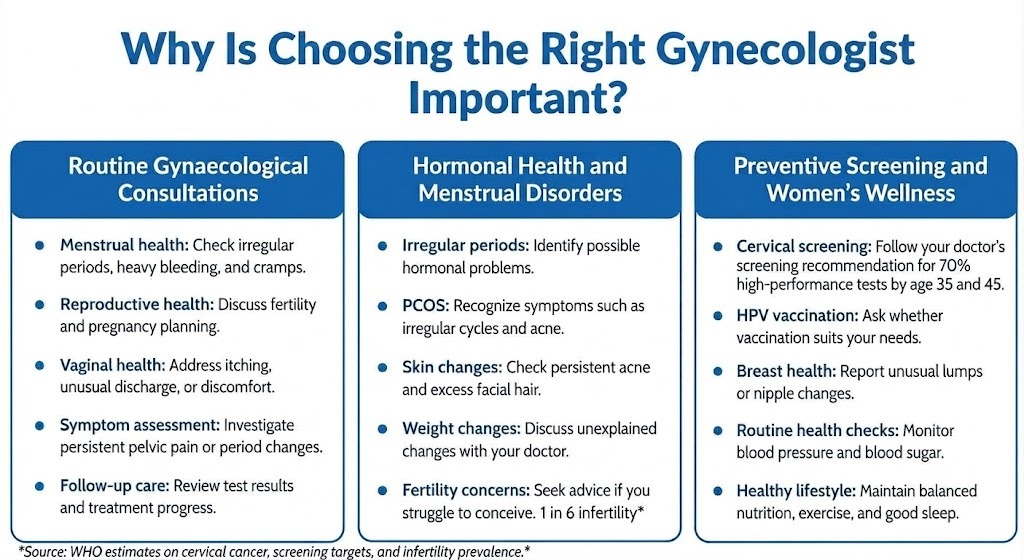
Your reproductive health can change at different stages of life, from your first period to pregnancy and menopause. Choosing the right doctor helps you understand these changes and make informed decisions about your health. Regular consultations can help you discuss menstrual problems, hormonal changes, and preventive screenings based on your needs. The World Health Organization estimated that 660,000 women developed cervical cancer worldwide in 2022, highlighting the importance of appropriate prevention and screening. When searching for a Gynecologist in Padur, consider the doctor’s qualifications, communication style, and range of services. A trusted specialist can help you discuss sensitive concerns comfortably, understand your options, and decide on suitable next steps for your women’s health.
Supports Regular Women’s Health Check-Ups
Regular women’s health check-ups help you understand your body and identify concerns that need medical attention. A gynaecologist can review your menstrual history, discuss contraception, recommend appropriate screenings, and address changes in your reproductive health. You don’t need to wait until you experience symptoms to ask about preventive care.
The World Health Organization recommends cervical cancer screening strategies that aim to screen 70% of women with high-performance tests by ages 35 and 45. Your doctor can advise you on the appropriate screening schedule based on your age, medical history, and local guidelines.
During a consultation, you can discuss:
- Menstrual changes and reproductive health concerns.
- Appropriate cervical cancer screening and HPV vaccination.
- Family history and personal risk factors.
- Preventive care suited to your age and health needs.
When choosing a Gynecologist in Padur, look for a specialist who explains preventive care clearly and helps you understand which checks you actually need.
Helps Address Menstrual and Hormonal Concerns
Irregular periods, severe menstrual cramps, persistent acne, and unexpected changes in body hair can leave you wondering whether your hormones need attention. These symptoms can have several causes, so avoid self-diagnosing or relying on online remedies. A gynaecologist can review your symptoms, medical history, and menstrual patterns before recommending suitable tests or treatment.
Consider consulting a specialist if you experience:
- Irregular periods: Your menstrual cycle frequently changes or periods stop unexpectedly.
- Severe period pain: Cramps interfere with your daily activities.
- Possible PCOS symptoms: You notice irregular periods, acne, or excess facial hair.
- Unusual bleeding: You experience bleeding between periods or after menopause.
The World Health Organization estimates that approximately 1 in 6 people worldwide experience infertility during their lifetime, highlighting the importance of accessible reproductive healthcare. However, these concerns do not automatically indicate infertility. A qualified Gynecologist in Padur can help you understand your symptoms and discuss appropriate next steps.
Provides Guidance During Pregnancy and Fertility Planning
Planning a pregnancy or navigating the early stages of pregnancy can bring many questions. A gynaecologist can help you review your medical history, discuss medications, understand prenatal care, and identify health factors that may affect your pregnancy plans. Early guidance also helps you understand which tests, supplements, and lifestyle changes may suit your individual needs.
For example, if you’re planning to conceive, your doctor may review your menstrual cycle, vaccination history, and existing health conditions. If you’ve recently confirmed a pregnancy, the doctor can explain your first antenatal visit and recommend appropriate monitoring.
The World Health Organization estimates that about 1 in 6 people experience infertility during their lifetime. If you’ve tried to conceive for 12 months without success, consider seeking a fertility assessment; seek advice sooner if age or a known medical condition makes earlier assessment appropriate.
When choosing a Gynecologist in Padur, look for someone who explains your options clearly and supports informed decisions throughout your reproductive journey.
How to Choose the Best Gynecologist in Padur
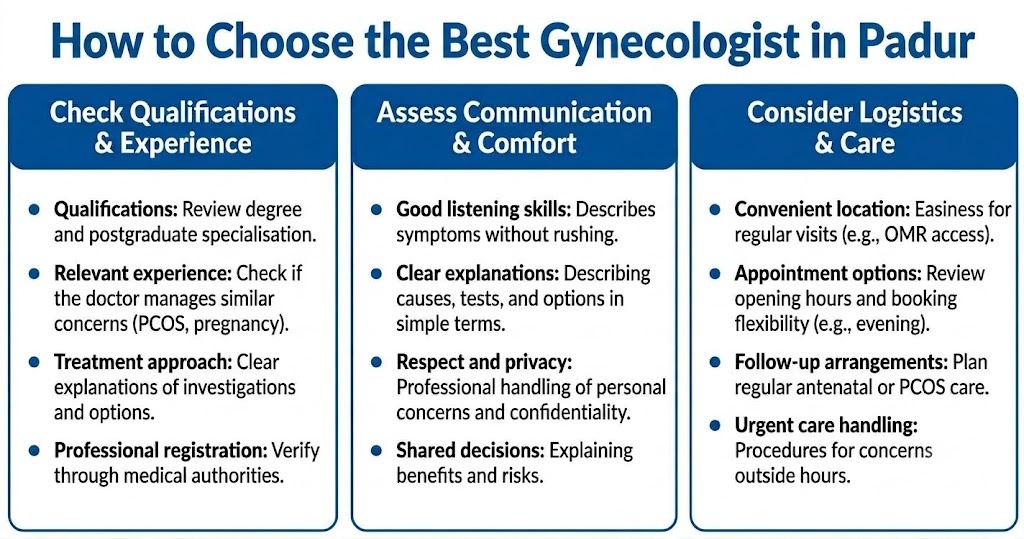
Choosing the right gynaecologist helps you manage your reproductive health with confidence. Whether you need advice about irregular periods, PCOS, pregnancy, or preventive care, consider the doctor’s qualifications, experience, communication style, and available services. Check whether the clinic offers convenient appointments and follow-up consultations. You can also read patient reviews to understand others’ experiences, but use them alongside professional credentials. Before booking, prepare questions about your symptoms and treatment options. A Gynecologist in Padur who listens carefully and explains your choices can help you make informed decisions. Choose a specialist who respects your concerns and supports your individual health needs.
Check the Doctor’s Qualifications and Experience
A gynaecologist’s qualifications and clinical experience can help you choose appropriate care for your needs. Check whether the doctor holds recognised medical qualifications and specialist training in obstetrics and gynaecology. If you need pregnancy care, fertility guidance, or support with PCOS, look for relevant experience in that area.
Before booking, consider these points:
- Qualifications: Review the doctor’s medical degree and postgraduate specialisation.
- Relevant experience: Check whether the doctor regularly manages concerns similar to yours.
- Treatment approach: Look for a specialist who explains investigations and treatment options clearly.
- Professional registration: Verify registration through the appropriate medical authority when possible.
For example, someone planning a pregnancy may prefer a specialist experienced in preconception and antenatal care. A patient with irregular periods may need guidance on menstrual and hormonal concerns. When comparing options, choose a Gynecologist in Padur whose expertise matches your health needs rather than relying on online ratings alone.
Look for Clear Communication and Patient Comfort
Women’s health appointments often involve personal or sensitive concerns. Choose a gynaecologist who listens without judgement, explains medical terms in simple language, and gives you time to ask questions. You should feel comfortable discussing menstrual changes, sexual health, fertility, or pregnancy concerns.
Use this table to assess the doctor’s communication style during your first consultation:
| What to Check | What Good Communication Looks Like |
| Listening skills | The doctor lets you explain your symptoms without rushing. |
| Clear explanations | The doctor describes possible causes, tests, and treatment options in simple terms. |
| Respect and privacy | The doctor treats your concerns respectfully and discusses confidentiality. |
| Shared decisions | The doctor explains the benefits and risks of available options. |
| Questions and doubts | The doctor encourages questions and checks that you understand the advice. |
For example, if you feel nervous about a pelvic examination, the doctor should explain why it may help, describe the process, and discuss your concerns before proceeding. Choose a Gynecologist in Padur who respects your preferences and helps you feel informed throughout your care.
Consider Location, Appointment Availability, and Follow-Up
A conveniently located clinic can make regular consultations easier, especially during pregnancy or when you need repeated visits. Check the clinic’s opening hours, appointment booking options, waiting times, and follow-up arrangements before deciding. Also, ask how the clinic handles urgent concerns and whom you should contact outside normal hours.
For example, if you work in OMR, a clinic in Padur with evening appointments may help you attend visits without disrupting your workday. If you are planning a pregnancy, ask whether the clinic can arrange regular antenatal appointments and explain when you should return. If you need ongoing care for PCOS, check whether the doctor offers follow-up consultations to review symptoms and treatment progress.
When selecting a Gynecologist in Padur, consider travel time, appointment flexibility, and continuity of care—not just the distance from your home.
What Services Should You Look for in a Gynecologist in Padur?
A good gynaecology clinic should support your health at different stages of life, from your first period to pregnancy and menopause. Before booking an appointment, check whether the doctor offers services that match your needs. These may include menstrual health assessments, PCOS/PCOD management, pregnancy care, fertility guidance, and preventive screenings. The World Health Organization estimates that approximately 1 in 6 adults worldwide experience infertility during their lifetime, highlighting the importance of accessible reproductive healthcare. When choosing a Gynecologist in Padur, look for a specialist who explains your options clearly, recommends appropriate investigations, and helps you plan your care according to your medical history.
Menstrual Health and PCOS/PCOD Management
Irregular periods, painful cramps, acne, and unexpected hair growth can sometimes indicate hormonal concerns. A gynaecologist can assess your symptoms, review your menstrual history, and recommend suitable tests when necessary. One common condition is polycystic ovary syndrome (PCOS), also called PCOD in everyday clinical conversations.
The World Health Organization estimates that PCOS affects around 10–13% of reproductive-aged women worldwide, although many cases remain undiagnosed. Symptoms and treatment needs vary from person to person, so avoid self-diagnosis or unverified remedies.
Consider consulting a specialist if you experience:
- Frequently irregular or missed periods.
- Severe menstrual pain that affects daily activities.
- Persistent acne or excess facial hair alongside menstrual changes.
- Difficulty managing symptoms associated with PCOS.
A Gynecologist in Padur can help identify possible causes and discuss suitable treatment, lifestyle changes, and follow-up care based on your individual needs.
Pregnancy Care and Antenatal Consultations
Pregnancy brings many changes, and regular antenatal consultations help you understand what to expect at each stage. Your gynaecologist can monitor your health, assess your baby’s development, recommend appropriate tests, and answer questions about nutrition, medicines, and daily activities.
The World Health Organization recommends at least eight antenatal contacts during pregnancy to help improve the experience and outcomes of care. Your doctor can tailor your visit schedule to your medical history and pregnancy needs.
During antenatal consultations, you can discuss:
- Early pregnancy checks: Confirm your pregnancy and plan initial assessments.
- Routine monitoring: Review blood pressure, symptoms, and relevant test results.
- Nutrition and supplements: Ask about folic acid, iron, and other recommended nutrients.
- Warning signs: Learn when symptoms such as heavy bleeding or severe abdominal pain need urgent attention.
- Birth preparation: Discuss delivery options and plans for later pregnancy.
When choosing a Gynecologist in Padur, look for clear guidance and consistent follow-up throughout your pregnancy.
Fertility Guidance and Preconception Counselling
Preconception counselling helps you prepare for pregnancy by reviewing your health, medical history, lifestyle, and possible risk factors. A gynaecologist may discuss your menstrual cycle, existing conditions, medicines, vaccinations, and supplements before you start trying to conceive.
The World Health Organization estimates that about 1 in 6 adults experience infertility during their lifetime. However, this statistic does not mean that every person with irregular periods or delayed conception has infertility.
For example, if you plan to become pregnant in the next six months, your doctor may review your health conditions and explain folic acid recommendations. If you have irregular periods, the doctor may assess possible causes and discuss appropriate next steps. Seek fertility advice after 12 months of trying to conceive without success, or sooner if you are 35 or older or have known reproductive health concerns. A Gynecologist in Padur can help you understand your options and plan care suited to your circumstances.
Questions to Ask During Your First Gynaecologist Appointment
Your first gynaecologist appointment gives you an opportunity to discuss your health concerns and understand your care options. Preparing a few questions beforehand can help you feel more confident and make the most of your visit. Ask about menstrual changes, contraception, fertility, pregnancy planning, or any symptoms that worry you. You can also discuss preventive screenings and when to schedule your next check-up. The World Health Organization estimates that approximately 1 in 6 adults experience infertility during their lifetime, highlighting the value of accessible reproductive healthcare. When visiting a Gynecologist in Padur, ask questions openly and share your medical history for personalised guidance.
What Should I Discuss During My First Visit?
Your first appointment is a good time to discuss your current symptoms, menstrual history, reproductive goals, and general health. Explain any changes you have noticed, even if they seem minor. Your doctor can use this information to understand your concerns and recommend appropriate next steps.
Consider discussing these topics:
- Menstrual cycle: Mention irregular periods, heavy bleeding, or severe cramps.
- Medical history: Share existing conditions, previous surgeries, allergies, and medicines you take.
- Family history: Explain any relevant family history of reproductive or hormonal conditions.
- Pregnancy plans: Discuss contraception, fertility concerns, or plans to conceive.
- Lifestyle: Ask how sleep, nutrition, exercise, and stress may affect your health.
For example, if your periods have become irregular over the past three months, explain when the changes began. A Gynecologist in Padur can assess your symptoms and guide you towards suitable investigations or care.
What Tests or Screenings Might I Need?
Your gynaecologist may recommend tests based on your age, symptoms, medical history, and reproductive health needs. You do not need every available test at every visit. Ask your doctor why a test may help, what it involves, and how you will receive the results.
| Test or Screening | Why Your Doctor May Recommend It |
| Cervical cancer screening | Checks for cervical changes using an appropriate screening method. |
| Blood tests | Helps assess concerns such as anaemia or certain hormonal problems. |
| Ultrasound scan | Examines the uterus and ovaries when symptoms or clinical findings warrant it. |
| Pregnancy test | Helps confirm pregnancy when appropriate. |
| STI testing | Checks for specific sexually transmitted infections based on your circumstances. |
The World Health Organization recommends cervical screening strategies that aim to reach 70% of women with high-performance tests by ages 35 and 45. Your personal screening schedule may differ. A Gynecologist in Padur can explain which tests suit your needs and whether you need follow-up.
How Can I Prepare for My Appointment?
A little preparation can make your gynaecology appointment more comfortable and productive. Before your visit, note your symptoms, menstrual dates, medical history, and any questions you want to discuss. Bring previous test reports and a list of medicines or supplements you take. These details help your doctor understand your situation without relying only on memory.
For example, if you experience irregular periods, record the start dates of your last few cycles and note any unusual pain or bleeding. If you are planning a pregnancy, write down your questions about supplements, lifestyle, and preconception care.
You can also:
- Confirm your appointment time and clinic location.
- Ask whether you need to follow any special instructions before a test.
- Bring a trusted companion if you feel more comfortable.
- Arrive a little early to complete registration.
When visiting a Gynecologist in Padur, share your concerns honestly and ask for clarification whenever you need it.
Conclusion
Choosing the right gynaecologist is an important step towards protecting your reproductive health and overall well-being. Whether you need support with irregular periods, PCOS/PCOD, pregnancy care, or fertility planning, consider the doctor’s qualifications, communication style, available services, and follow-up support before making your decision. Regular consultations can also help you understand your health needs and make informed decisions at every stage of life.
If you’re looking for a Gynecologist in Padur, choose a specialist who listens to your concerns, explains your options clearly, and helps you feel comfortable discussing your health. Take the next step towards better women’s healthcare with Ayra Healthcare.
Ready to book your consultation? Visit the Ayra Healthcare contact page to enquire about appointments and find the right care for your needs.
Frequently Asked Questions
1. How do I choose the best gynecologist in Padur?
Choose a gynaecologist with recognised qualifications, relevant experience, clear communication, and services that match your health needs. Check appointment availability, clinic location, and patient reviews before booking.
2. When should I visit a gynecologist for the first time?
You can visit a gynaecologist when you have questions about periods, puberty, contraception, or reproductive health. You should also seek advice if you experience unusual bleeding, severe menstrual pain, or other concerning symptoms.
3. How often should I visit a gynecologist?
Your visit frequency depends on your age, medical history, symptoms, and reproductive health needs. Ask your doctor to recommend a suitable schedule for preventive care and follow-up consultations.
4. Can a gynecologist help with PCOS or PCOD?
Yes. A gynaecologist can assess symptoms such as irregular periods, acne, and excess facial hair, recommend appropriate investigations, and discuss treatment and lifestyle management options.
5. What should I bring to my first gynecologist appointment?
Bring previous medical reports, a list of medicines and supplements, relevant medical history, and notes about your symptoms and menstrual cycle. Prepare questions so you can discuss your concerns confidently.
6. Can I consult a gynecologist for irregular periods?
Yes. A gynaecologist can assess irregular periods by reviewing your menstrual history, symptoms, and medical background. Depending on the findings, the doctor may recommend blood tests, an ultrasound, or other investigations.
7. What services should a women’s health clinic in Padur offer?
Look for services such as menstrual health assessments, PCOS/PCOD management, pregnancy care, fertility guidance, preventive screenings, and menopause support. Choose a clinic based on the services you need.
8. When should I consult a gynecologist for fertility concerns?
Consider seeking medical advice if you have difficulty conceiving after 12 months of trying. If you are 35 or older, many guidelines recommend seeking an evaluation after six months. Consult a doctor sooner if you have irregular periods or a known reproductive health condition.
9. What tests might a gynecologist recommend during a consultation?
Depending on your symptoms and health history, your doctor may recommend blood tests, pregnancy testing, cervical cancer screening, STI testing, or an ultrasound. Not everyone needs every test, so ask why a particular test may help.
10. How can I book an appointment with a gynecologist in Padur?
Start by checking the clinic’s official website for available services, doctor information, and appointment details. You can visit the Ayra Healthcare contact page to enquire about consultations and appointment availability.