Why Regular Women’s Health Checkups Are Important
Introduction:
Many women prioritise family and work while postponing their own healthcare until symptoms appear. However, irregular periods, hormonal changes, high blood pressure and certain cancers may require medical attention before noticeable symptoms develop. Why Regular Women’s Health Checkups Are Important becomes clear when we consider that India’s National Family Health Survey-5 (2019–21) found that only 1.9% of women aged 30–49 had ever undergone cervical cancer screening. Source: Ministry of Health and Family Welfare. Regular women’s health checkups help identify potential concerns, assess reproductive health and support timely medical care. Depending on age, symptoms and medical history, a doctor may recommend blood pressure checks, diabetes screening, breast examinations or cervical cancer screening. Scheduling appropriate checkups helps women make informed decisions and protect their long-term health.Make Your Health a PriorityRegular checkups help you stay informed about your health and recognise concerns early. Connect with Ayra Health Care in Manikonda to discuss your general healthcare needs and take the next step towards better well-being.
Why Regular Women’s Health Checkups Are Important
Women often balance work, family and personal responsibilities while overlooking their health. Regular medical visits help women understand their health risks, identify concerns early and make informed decisions. According to India’s National Family Health Survey-5 (2019–21), only 1.9% of women aged 30–49 had ever undergone cervical cancer screening. This finding highlights the need for greater awareness and access to preventive healthcare. Regular Women’s Health Checkups also help doctors assess reproductive health, blood pressure and diabetes risk based on individual needs. By scheduling appropriate appointments, women can discuss symptoms, review test results and receive timely medical guidance. Regular Women’s Health Checkups support informed choices and long-term well-being.
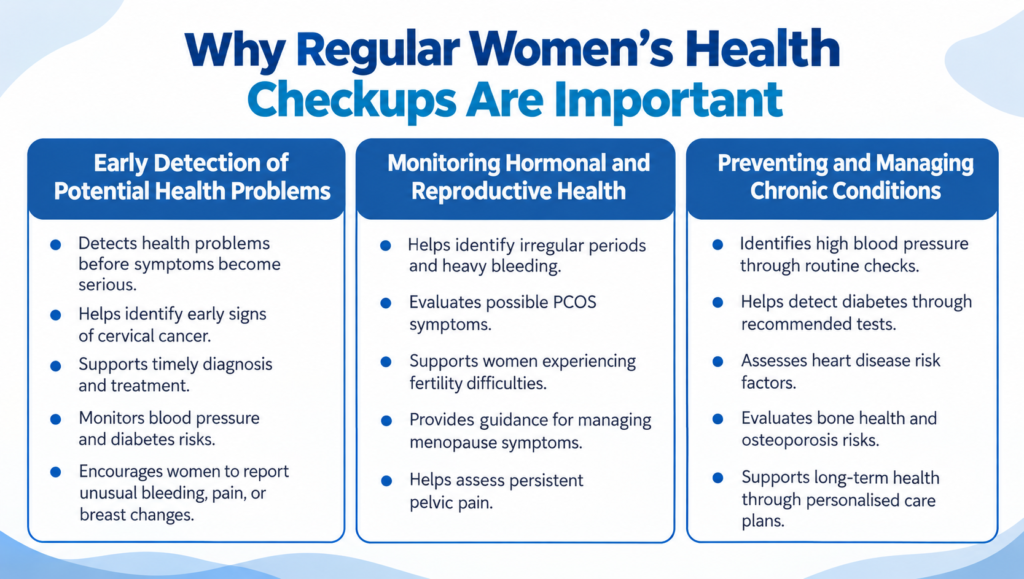
Early Detection of Potential Health Problems
Many health conditions develop gradually without obvious symptoms. Regular Women’s Health Checkups help doctors identify potential concerns and recommend appropriate tests before complications develop. For example, cervical cancer screening can detect precancerous changes, allowing doctors to recommend timely follow-up and treatment.
India’s National Family Health Survey-5 (2019–21) found that only 1.9% of women aged 30–49 had ever undergone cervical cancer screening, highlighting a significant gap in preventive care. Source: NFHS-5 research.
Depending on age, symptoms and medical history, a doctor may recommend blood pressure checks, diabetes screening or cervical cancer screening. Women should also discuss persistent pain, unusual bleeding or new breast changes. Early assessment does not guarantee prevention, but it can support timely diagnosis and appropriate care.
Monitoring Hormonal and Reproductive Health
Hormonal changes can affect menstrual cycles, fertility, mood and overall well-being throughout a woman’s life. Regular Women’s Health Checkups give women an opportunity to discuss these changes with a qualified healthcare professional. Doctors can assess symptoms, review medical history and recommend tests when necessary.
Women should seek medical advice about concerns such as:
- Irregular periods: Changes in cycle frequency or unusually heavy bleeding may need assessment.
- PCOS symptoms: Acne, excess facial hair and irregular periods may indicate a hormonal concern.
- Fertility difficulties: A doctor can evaluate possible reproductive factors and discuss appropriate next steps.
- Menopause symptoms: Hot flashes, sleep difficulties and vaginal dryness may benefit from personalised care.
- Persistent pelvic pain: Ongoing discomfort deserves medical evaluation rather than self-treatment.
Not every hormonal change requires laboratory testing. A doctor can determine which assessments suit each woman’s symptoms, age and health history.
Preventing and Managing Chronic Conditions
Chronic conditions such as diabetes and high blood pressure can affect women’s health for years, sometimes without noticeable symptoms. Regular Women’s Health Checkups help doctors assess individual risk factors, recommend suitable screening and monitor existing conditions. Early identification can support better management and reduce the risk of complications.
For example:
- High blood pressure: A routine blood pressure measurement can identify elevated readings that need follow-up.
- Type 2 diabetes: A doctor may recommend a blood glucose test or HbA1c test based on age and risk factors.
- Heart health: Family history, cholesterol levels, smoking and other risk factors can guide preventive advice.
- Bone health: Women approaching or experiencing menopause may need an assessment of osteoporosis risk.
Women do not need every test at every visit. Doctors can create an individual plan based on medical history, age and previous results. Regular Women’s Health Checkups help women track important health indicators and take practical steps toward long-term wellness.
Essential Women’s Health Screenings to Discuss With Your Doctor
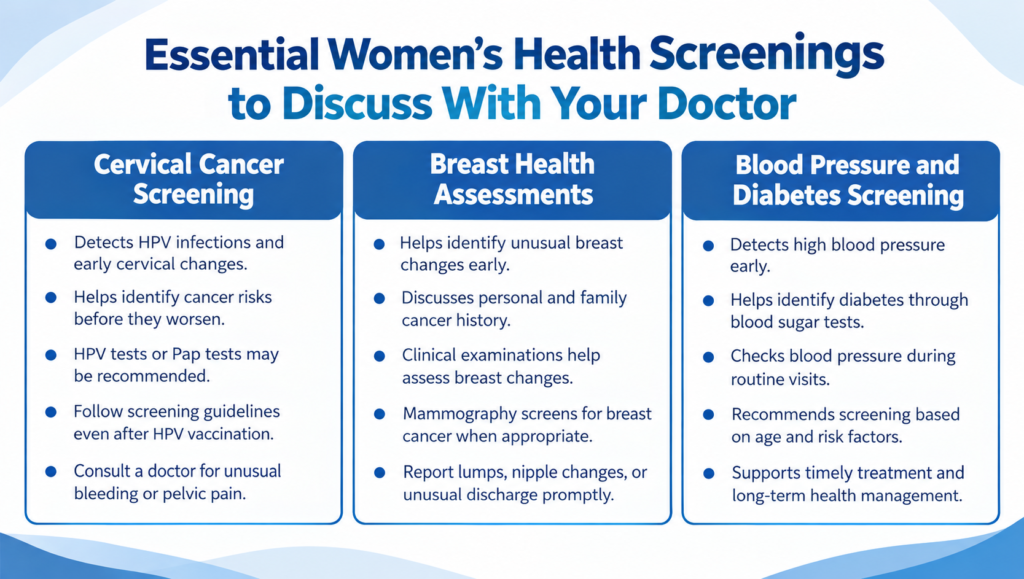
Preventive screenings help women understand their health risks and identify certain conditions before symptoms appear. Regular Women’s Health Checkups give you an opportunity to discuss which tests suit your age, family history and medical needs. Common assessments include cervical cancer screening, breast health evaluation, blood pressure measurement and diabetes screening. The World Health Organization estimated that 2.3 million women received a breast cancer diagnosis worldwide in 2022. This highlights the importance of breast health awareness and timely medical evaluation. However, every woman needs a personalised screening plan rather than every available test. Talk to your doctor about recommended screenings, suitable intervals and follow-up care to make informed decisions about your health.
Cervical Cancer Screening
Cervical cancer screening helps doctors identify high-risk human papillomavirus (HPV) infections or precancerous changes before they progress. The World Health Organization recommends starting regular screening at age 30 for women in the general population, with high-performance tests such as HPV DNA testing every 5–10 years under its recommended strategy. Women living with HIV generally need earlier and more frequent screening.
Doctors may recommend an HPV test, a Pap test or another suitable screening method, depending on local guidelines and individual circumstances. Even women who receive HPV vaccination should follow screening recommendations. If you experience unusual vaginal bleeding, bleeding after sex or persistent pelvic pain, seek medical advice rather than waiting for your next screening appointment. Your doctor can recommend the appropriate test and follow-up plan.
Breast Health Assessments
Breast health assessments help women recognise changes and understand their individual risk of breast cancer. The World Health Organization estimated 2.3 million new breast cancer cases among women worldwide in 2022. Regular Women’s Health Checkups provide an opportunity to discuss breast symptoms, family history and appropriate screening options. Depending on your age and risk, your doctor may recommend a clinical examination or mammography.
| Assessment | Purpose |
| Breast awareness | Helps you recognise changes in your breasts. |
| Clinical breast examination | Allows a trained healthcare professional to assess concerning changes. |
| Mammography | Uses X-rays to screen for breast cancer in eligible women. |
| Diagnostic imaging | Helps investigate a lump or another concerning symptom. |
No single screening schedule suits every woman. Ask your doctor when to begin mammography and how often to repeat it. Seek prompt assessment for a new lump, nipple changes, unusual discharge or skin dimpling, even if your last screening result appeared normal.
Blood Pressure and Diabetes Screening
High blood pressure and diabetes can develop without obvious symptoms, making appropriate screening important. The World Health Organization reported that approximately 1.28 billion adults aged 30–79 lived with hypertension worldwide in 2019, and nearly half did not know they had the condition. Regular Women’s Health Checkups help doctors assess these risks and recommend suitable follow-up.
For example, a doctor may measure your blood pressure during a routine visit. If your readings remain high, the doctor may recommend repeat measurements or home monitoring. Similarly, if you have a family history of diabetes, excess weight or other risk factors, your doctor may suggest a fasting blood glucose test or HbA1c test. These tests help assess blood sugar levels over different periods.
You do not need every test annually. Your doctor can determine the appropriate screening schedule based on your age, medical history, symptoms and previous results.
When Should Women Book a Health Checkup?
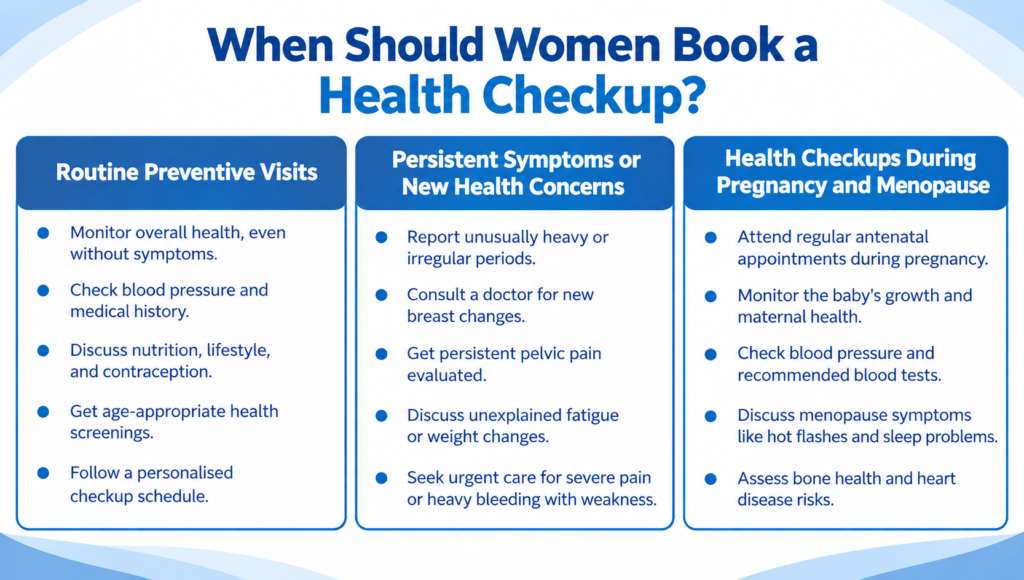
Women should schedule health checkups regularly and whenever they notice unusual symptoms. The right timing depends on age, medical history, family history and individual risk factors. Regular Women’s Health Checkups help women discuss preventive screenings, reproductive health and changes that may need medical attention. Women planning pregnancy should seek preconception advice, while pregnant women need consistent antenatal care. The World Health Organization recommends at least eight antenatal contacts during pregnancy to support healthy outcomes and identify potential complications. Women approaching menopause should also discuss new symptoms and long-term health risks with their doctors. Do not wait for symptoms to become severe before seeking medical advice.
Routine Preventive Visits
Routine preventive visits help women monitor their health even when they feel well. During Regular Women’s Health Checkups, doctors review medical history, measure blood pressure, discuss lifestyle habits and recommend age-appropriate screenings. These visits also give women time to ask questions about menstrual changes, contraception, nutrition and family health risks.
Your doctor may recommend different assessments depending on your needs. For example, a woman with a family history of diabetes may need earlier blood sugar testing, while another woman may need cervical cancer screening according to current guidelines. You do not automatically need every test each year. Instead, work with your doctor to create a personalised schedule.
Keep previous reports, medication details and vaccination records ready for your appointment. Regular follow-ups help you understand test results, track changes and make informed decisions about your health.
Persistent Symptoms or New Health Concerns
Do not ignore unusual symptoms simply because they seem mild or appear occasionally. Regular Women’s Health Checkups can help you discuss new concerns and determine whether you need further evaluation. Early medical advice may help identify the cause and guide appropriate treatment.
Book an appointment if you notice:
- Unusual bleeding: Heavy periods, bleeding between periods or bleeding after menopause.
- Breast changes: A new lump, nipple discharge, skin dimpling or changes in breast shape.
- Persistent pelvic pain: Ongoing discomfort, painful periods or pain during intercourse.
- Menstrual changes: Repeated irregular periods or a sudden change in your usual cycle.
- Unexplained changes: Persistent fatigue, unexpected weight changes or unusual thirst.
These symptoms do not always indicate a serious illness, but a healthcare professional can assess them. Seek urgent medical care for severe pain, fainting, heavy bleeding with weakness or other sudden, severe symptoms. Never wait for a routine appointment when symptoms require urgent attention.
Health Checkups During Pregnancy and Menopause
Pregnancy and menopause bring different health needs, so women should seek care that matches each stage of life. During pregnancy, antenatal appointments help doctors monitor maternal health, assess the baby’s development and identify potential complications. The World Health Organization recommends at least eight antenatal contacts throughout pregnancy. For example, your doctor may check blood pressure, recommend blood tests, monitor fetal growth and discuss nutrition.
Menopause usually occurs between ages 45 and 55, according to the WHO. Hormonal changes may affect sleep, mood, menstrual patterns and bone health. The US Office on Women’s Health reports that as many as three in four women experience hot flashes during the menopause transition.
For example, discuss persistent night sweats, sleep difficulties or vaginal dryness with your doctor. Regular Women’s Health Checkups also help assess cardiovascular and bone health risks. Your doctor can recommend suitable tests and treatments based on your symptoms and medical history.
How to Prepare for a Women’s Health Checkup
Preparing for a medical appointment helps you discuss your concerns clearly and make informed decisions. Before your visit, list your symptoms, note changes in your menstrual cycle and gather your previous medical reports. Regular Women’s Health Checkups give you an opportunity to review preventive screenings, discuss family medical history and understand your health risks. Write down questions about medications, nutrition, reproductive health or any symptoms that worry you. Bring details of your current medicines and supplements, too. If you feel nervous, ask a trusted person to accompany you. A little preparation helps you use your appointment time effectively and plan your next steps with confidence.
Medical Records and Medication Details to Bring
Your medical records help your doctor understand your health history and recommend appropriate care. Before attending Regular Women’s Health Checkups, organise your previous test reports, prescriptions and details of any surgeries or long-term conditions. Include your family history of diabetes, high blood pressure, heart disease or certain cancers.
Prepare a list of every medicine you take, including prescription drugs, over-the-counter products, vitamins and herbal supplements. Record each medicine’s name, dose and frequency. Also mention allergies and any side effects you have experienced.
Bring these essential details:
- Previous reports: Blood tests, ultrasound scans, cervical screening results and other relevant investigations.
- Medication list: Names, doses and how often you take each medicine.
- Medical history: Previous illnesses, surgeries, allergies and ongoing conditions.
- Symptom notes: When symptoms started, how often they occur and what makes them better or worse.
- Family history: Important health conditions affecting close relatives.
The US National Institutes of Health recommends preparing your concerns and taking medication details and relevant records to appointments. This helps your doctor review your situation more effectively.
Questions to Ask Your Doctor
Asking questions helps you understand your health, screening options and next steps. During Regular Women’s Health Checkups, discuss your concerns openly, even if they feel personal or embarrassing. Your doctor can explain which tests suit your age, symptoms, family history and individual risk factors. You do not need every available test; focus on the assessments your doctor recommends for you.
Use this table to prepare questions before your appointment.
| Topic | Questions to Ask |
| Preventive care | Which health screenings do I need at my age? |
| Menstrual health | Are my period changes normal, or do they need assessment? |
| Reproductive health | Should I discuss contraception, fertility or pregnancy planning? |
| Medicines | What are the benefits, possible side effects and correct doses? |
| Test recommendations | Why do I need this test, and how should I prepare? |
| Family history | Does my family history increase my risk of certain conditions? |
| Follow-up | When should I return, and which symptoms need earlier attention? |
Write down your doctor’s answers or ask for written instructions. If you do not understand a medical term, ask your doctor to explain it in simple language.
Understanding Your Test Results and Follow-Up Plan
Understanding your results helps you take the right next steps. After Regular Women’s Health Checkups, ask your doctor to explain what each result means, whether it falls within the expected range and whether you need further tests. Do not interpret a result in isolation; your symptoms, medical history and the laboratory’s reference range all matter.
For example, if a blood glucose result is higher than expected, your doctor may recommend another test or an HbA1c test before making a diagnosis. If a cervical screening result shows an abnormality, your doctor can explain whether you need repeat screening, an HPV test or further assessment. An abnormal result does not automatically mean you have cancer.
Before leaving, confirm when and how you will receive pending results. Ask whether you need medication, lifestyle changes or another appointment, and record the date. Follow your clinician’s advice and contact the clinic if you do not receive expected results or need clarification. Seek urgent care for severe or rapidly worsening symptoms.
Conclusion:
Regular Women’s Health Checkups play an important role in protecting long-term health, identifying potential concerns early and supporting informed healthcare decisions. From monitoring blood pressure and diabetes risks to discussing menstrual changes and age-appropriate screenings, preventive care helps women understand their bodies and take timely action. Keep your medical records organised, ask your doctor questions and follow the recommended testing and follow-up schedule. Remember, the right checkups depend on your age, symptoms, family history and individual health needs.Take the Next Step Towards Better HealthYour well-being deserves attention at every stage of life. Connect with Ayra Health Care in Manikonda to explore its general healthcare services and discuss your healthcare needs with a qualified professional. Make preventive care part of your routine and take a proactive step towards a healthier future.
Frequently Asked Questions
1. Why are regular women’s health checkups important?
Regular women’s health checkups help monitor overall health, identify potential health concerns early and assess risks related to blood pressure, diabetes and reproductive health. They also help women understand which preventive screenings they need.
2. How often should women have a health checkup?
The frequency depends on age, medical history, existing conditions and individual risk factors. Many women benefit from routine preventive visits, while others may need more frequent appointments based on their doctor’s advice.
3. At what age should women start regular health checkups?
Women should establish preventive healthcare visits during adolescence or early adulthood. The appropriate assessments change with age, reproductive health needs, family history and personal risk factors.
4. What tests should women include in a health checkup?
Depending on individual needs, a checkup may include blood pressure measurement, diabetes screening, cholesterol testing and cervical cancer screening. Your doctor can recommend suitable tests based on your health history and current guidelines.
5. Are health checkups necessary when I feel healthy?
Yes. Some conditions, including high blood pressure and early-stage diabetes, may cause no obvious symptoms. Regular checkups help assess risk factors and determine whether you need screening.
6. What is cervical cancer screening, and why is it important?
Cervical cancer screening looks for high-risk HPV infections or changes in cervical cells that could lead to cancer. Depending on age and local guidelines, doctors may recommend an HPV test, a Pap test or another appropriate screening method.
7. Should women get regular breast health assessments?
Yes. Women should understand their usual breast appearance and discuss any new lumps, nipple changes or unusual discharge with a healthcare professional. A doctor can recommend clinical assessments or mammography based on age, symptoms and risk factors.
8. Should women discuss irregular periods during a checkup?
Yes. Repeated irregular periods, unusually heavy bleeding, missed periods or severe menstrual pain may need medical evaluation. Your doctor can assess possible causes, including hormonal changes, thyroid conditions or polycystic ovary syndrome (PCOS).
9. Are women’s health checkups important during menopause?
Yes. Menopause can affect sleep, mood, bone health and cardiovascular risk. A healthcare professional can help manage symptoms and recommend suitable assessments based on medical history, age and individual needs.
10. Where can women seek general healthcare advice in Manikonda?
Women in Manikonda can explore the services offered by Ayra Health Care and contact the clinic to discuss their healthcare needs. Visit Ayra Health Care’s website for information about its services and contact details.